
 Natisha Rouse
 Every now and then, a story pops up that makes you realise just how quickly our world is shifting. A few months back, a friend showed me her new engagement ring over brunch in Melbourne’s inner north. It was stunning — the kind of sparkle that catches the light and nudges strangers to comment. Naturally, I assumed it was a diamond. But she grinned and said, “Guess again.”
Turns out, it was moissanite.
Honestly, I’d heard the word floating around but never taken the time to understand what separates diamond vs moissanites beyond the usual internet chatter. And I’ll admit — I was surprised to learn just how passionate people have become about choosing one over the other. Some see moissanite as a smart, ethical twist on tradition; others swear nothing compares to a natural diamond’s timeless allure.
So, I dug deeper. Spoke with jewellers, chatted with couples, read industry reports — the whole lot. What follows isn’t a sales pitch or a lecture, but rather a journalist’s close-up look at why this comparison is reshaping the way Australians shop for engagement rings and fine jewellery.
Where It All Began: Two Very Different Histories
Diamonds come with a mythology as old as time — formed deep in the earth under incredible pressure, pushed toward the surface by volcanic forces, and eventually cut into the stones we know today. There’s a romance to that origin story that’s hard to deny.
Moissanite, on the other hand, has a bit of a sci-fi twist. It was first discovered in a meteor crater in Arizona in the late 1800s. For a while, scientists thought the gem was diamond. It wasn’t — it was silicon carbide. Natural moissanite is incredibly rare, so the stones you see in jewellery are created in a lab using high-precision technology.
That’s where the conversation gets interesting. While diamonds can be mined or lab-grown, moissanite is almost always lab-created — and many people love that transparency.
How They Look: Is the Sparkle Really That Different?
A gemologist once told me that if diamonds are a classic novel, moissanite is the blockbuster movie adaptation: familiar, but more dramatic. And I have to say, it’s a fitting comparison.
Brilliance
Moissanites exhibit more “fire” — those rainbow-coloured flashes — thanks to a higher refractive index. This gives them a bold, almost electric sparkle. For some people, that’s the magic. For others, it’s a bit too much.
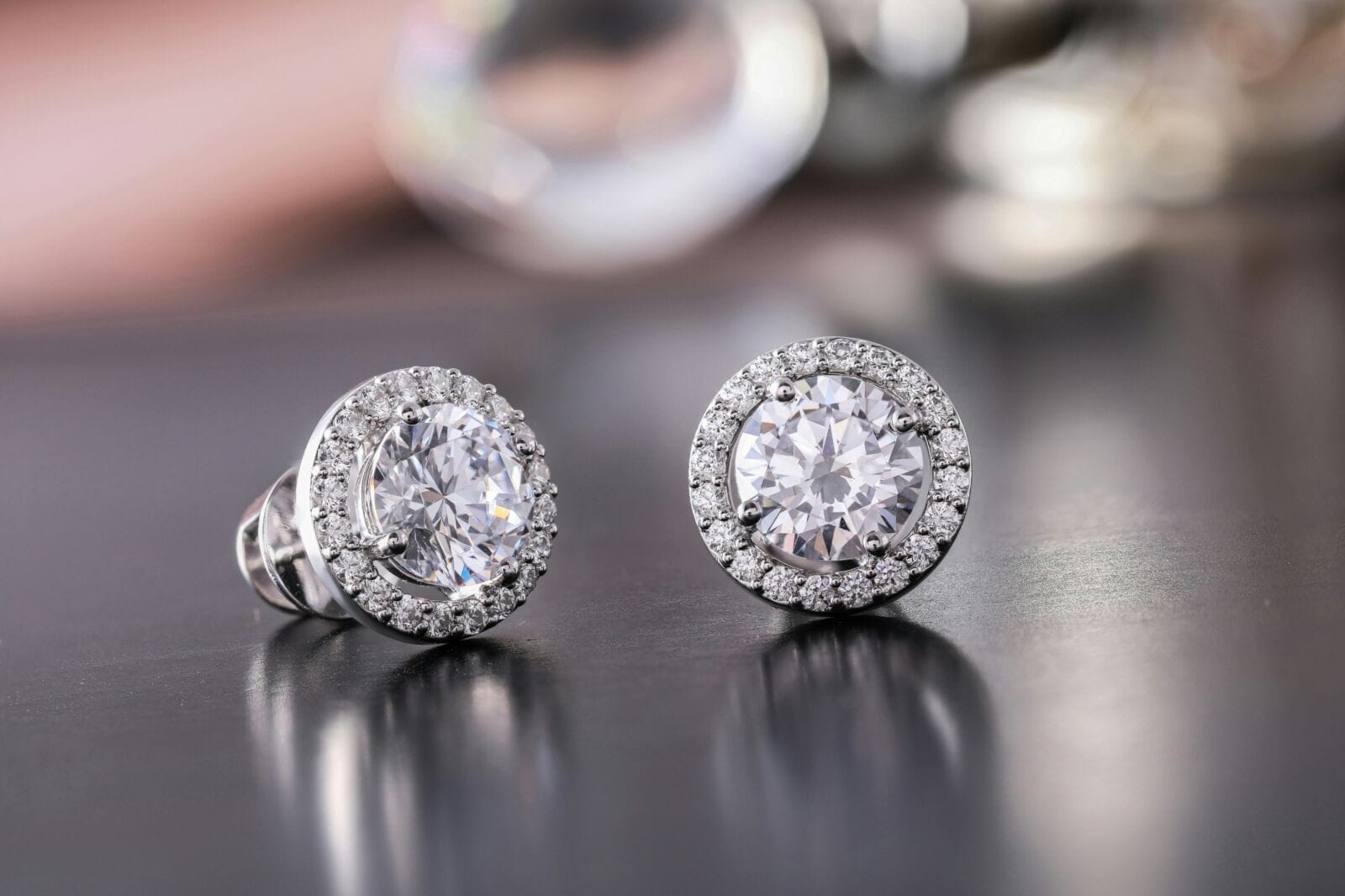
Diamonds, on the other hand, offer a cleaner, more subtle glitter. Their beauty lies in balance — brilliance, fire and scintillation working together without overpowering each other.
Colour
Most high-quality diamonds today are graded for colour on a strict scale. A D-grade diamond is icy, pure, almost blue-white. Lower grades drift toward faint yellow or brown tones.
Moissanite typically comes in “near colourless” or “colourless” varieties, though larger stones can show warm undertones in certain lighting. Some people notice it; others don’t.
Durability
This is where both stones shine — literally. Diamonds are the hardest natural substance on Earth, rating a perfect 10 on the Mohs scale. Moissanite comes in at 9.25 — extremely durable and excellent for everyday wear.
If your lifestyle includes rock climbing, home renos, or chasing toddlers around the backyard, either stone will hold up.
Ethics, Sustainability, and the Modern Consumer
You might not know this, but Australian couples increasingly ask jewellers tough questions about sourcing, mining transparency, and labour. Ethical jewellery isn’t fringe anymore — it’s mainstream.
Diamonds
If the diamond is mined, its ethical footprint depends heavily on the origin. Australian diamonds from the Argyle mine, for example, were known for high labour and environmental standards. But many diamonds on the global market come from more complex supply chains.
This is one reason man made diamonds have become so popular. Lab-grown diamonds offer the same chemical and physical properties as mined stones, without the environmental or geopolitical complications. They’ve also become more accessible price-wise. If you’re curious about how they compare in the real world, here’s a surprisingly insightful article that breaks down the trends in London’s jewellery scene.
Moissanites
Because moissanites are always lab-created, buyers often feel reassured knowing exactly where the stone came from. There’s no mining, no ecological disruption, no long supply chain involving multiple intermediaries.
For the environmentally conscious, that simplicity is appealing.
Price: The Part Everyone Secretly Wants to Know
Alright, let’s talk numbers — because no matter how romantic you are, budget does play a role.
Diamonds
A natural diamond of good quality and size can easily run into the thousands, if not tens of thousands. The rarity factor drives the price — that and decades of clever marketing.
Lab-grown diamonds are significantly more affordable, sometimes 40–70% less than mined stones, depending on size and quality. Still, they carry the prestige of being “diamonds,” which matters for some buyers.
Moissanites
Moissanites generally cost a fraction of a diamond’s price — especially compared to mined diamonds. Even a large, stunning moissanite can remain in the low four-digit range. This is a big part of their recent popularity: you can go big without blowing the budget.
If you’re comparing options, this guide is clear and helpful without being pushy.
Resale Value: A Complicated Topic Most People Don’t Ask About
Here’s something jewellers don’t always bring up unless you ask: jewellery rarely holds resale value the way people imagine.
Diamonds — especially mined diamonds — do tend to retain more value than moissanite. But even then, resale prices can be a shock. Unless a stone is large, rare, or comes from a premium brand, it won’t sell for anywhere near retail.
Moissanite, on the other hand, isn’t purchased for investment at all. It’s chosen for beauty, ethics, and affordability. Most buyers go into it without resale expectations, which can actually feel refreshing.
Who Typically Chooses Which — A Few Observations
After chatting with jewellers around Sydney and Brisbane, some interesting patterns emerged.
Moissanite Buyers
- Couples prioritising size without the steep price tag
- Environmentally conscious buyers
- People who simply love the colourful sparkle
- Younger couples wanting something modern and low-impact
One jeweller told me that moissanite buyers tend to be “confident in choosing what they love, rather than what tradition says.”
Diamond Buyers
- Couples wanting a classic or heirloom-style piece
- Buyers to whom the symbolism of a diamond really matters
- Those seeking long-term value or investment
- People who prefer a more understated sparkle
Interestingly, more couples are choosing lab-grown diamonds as a middle path — the symbolism of a diamond without the ethical concerns.
The Emotional Side of the Decision
Jewellery is rarely a purely rational purchase. It’s tied to love, milestones, personal taste, even family expectations.
I remember interviewing a couple who were both teachers. They chose moissanite because they wanted to put their savings toward a house deposit instead of a pricey stone. The bride told me, “I don’t look at my ring and see a compromise. I see a choice that fits our life.”
Another couple I met at a boutique in Perth chose a natural diamond because the groom wanted something “traditional, something that felt like what my dad and grandad chose.” Their story was just as valid — even touching, actually.
What matters is that the stone reflects the relationship, not the pressure of marketing or social media aesthetics.
A Few Practical Tips If You’re Still Deciding
If you’re hovering between the two, here’s what jewellers often wish more customers knew:
1. Look at both stones in person.
Photos online don’t tell the full story. Moissanite’s fire, especially, is something you should see under different lighting.
2. Be honest about your lifestyle.
Do you work with your hands? Lose jewellery often? Travel a lot? Durability and price might weigh differently.
3. Consider the long-term feeling, not just the moment.
This isn’t about resale value — it’s about emotional value. What stone will make you smile every day?
4. Don’t let anyone shame your choice.
There’s a surprising amount of snobbery online about diamonds and moissanites. Ignore it. Choose what feels right.
So… Diamond or Moissanite? The Answer Isn’t One-Size-Fits-All
After all my conversations, research, and yes — a bit of soul-searching — I’ve realised something simple:
Both stones are beautiful. Both are durable. Both can symbolise love in their own way.
Diamonds come with history, symbolism, and a classic elegance that’s deeply ingrained in our cultural stories. Moissanites offer brilliant sparkle, ethical clarity, and budget-friendly appeal that feels incredibly aligned with the values of many modern Australians.
The real question isn’t which stone is better, but rather which stone feels like you.
And maybe that’s the nicest part — we’re in an era where choice is not only possible but celebrated.
A Final Thought
Whether you’re proposing, celebrating a milestone, or simply treating yourself (and honestly, why not?), the ring you choose should feel authentic. Not perfect. Not expensive for the sake of it. Just right for your life, your story, your priorities.
If anything, the rise of moissanite and lab-grown gems has reminded us that jewellery is evolving — just like the people who wear it. And that’s something worth appreciating, no matter which stone ends up on your finger.